

"About" the Western
Butch Cassidy and the Sundance Kid

Here’s a post based on this week’s episode of Fifteen-Minute Film Fanatics and (at the end) a player that lets you listen to an ad-free version of the show. The post and the podcast don’t totally overlap: they complement each other. The post usually is a deeper look at an idea raised on the podcast. We take requests, so leave a comment below if there’s a film you’d like us to cover. We’ve done over 275 and you can find them all here. You can subscribe to the show wherever you get your podcasts; please consider leaving a review on your platform of choice. Thanks.
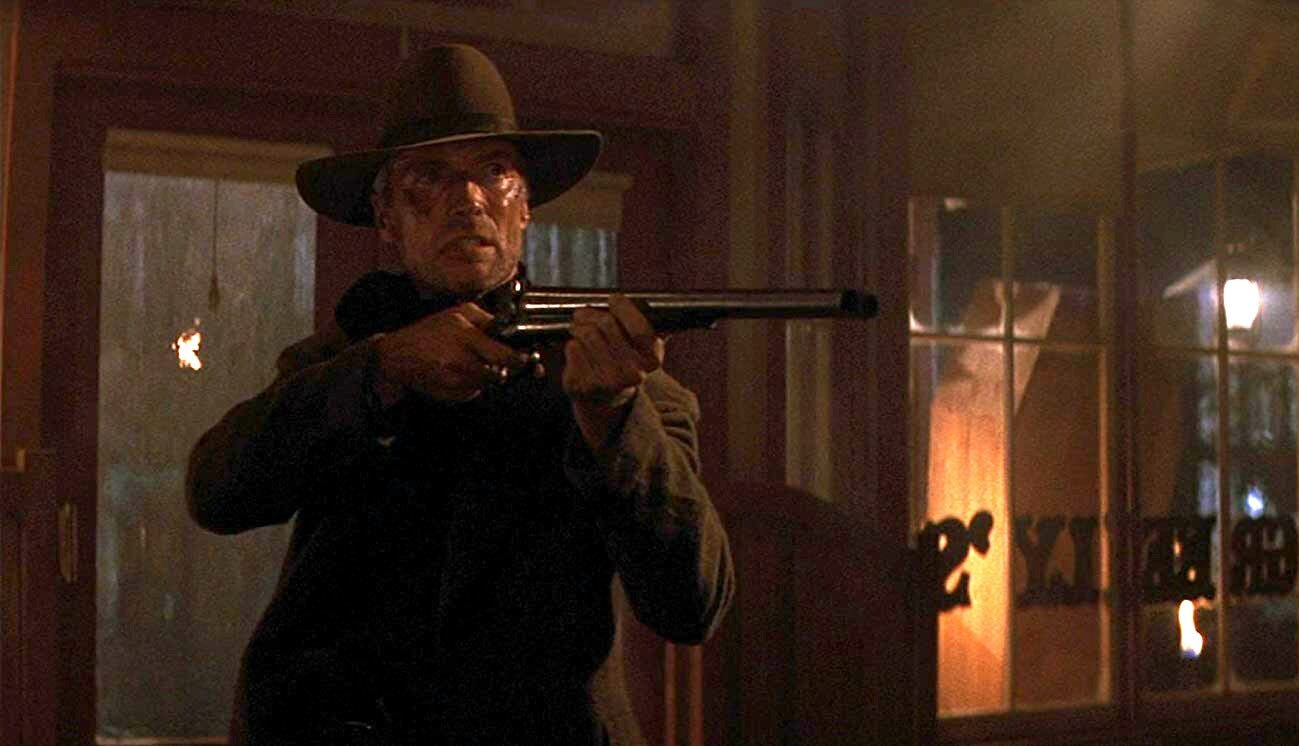
When Unforgiven premiered in 1992, critics rushed to be the first, fifth, or fiftieth in line to state that Clint Eastwood’s tenth (and probably best) western was actually “about the western!” Anthony Lane noted the “liturgy” of westerns that Eastwood follows in his “most reflective” contribution to the genre. Vincent Canby called it an “entertaining western that pays homage to the great tradition of movie westerns while surreptitiously expressing a certain amount of skepticism.” Roger Ebert wrote, “If the western was not dead, it was dying; audiences preferred science fiction and special effects. It was time for an elegy.” All true and all from worthy oracles, but this “about” business caught on to such an extent that I grew tired of hearing it because that’s what all genres do and the template for this supposed insight works wherever you use it. Apocalypse Now is “about the war film,” Nosferatu (pick any of the three) is “about the horror movie,” Hamlet is “about the revenge tragedy” and Chuck Jones’s “Hunting Trilogy” (“Rabbit season! Duck season!”) is “about the animated short.” Today we might say that a particular work “deconstructs” or “investigates” its own genre—old wine in new bottles—but the problem is that this never really happens: the genre elements remain powerful and win every time. That’s why they’re elemental: they make up the larger thing.
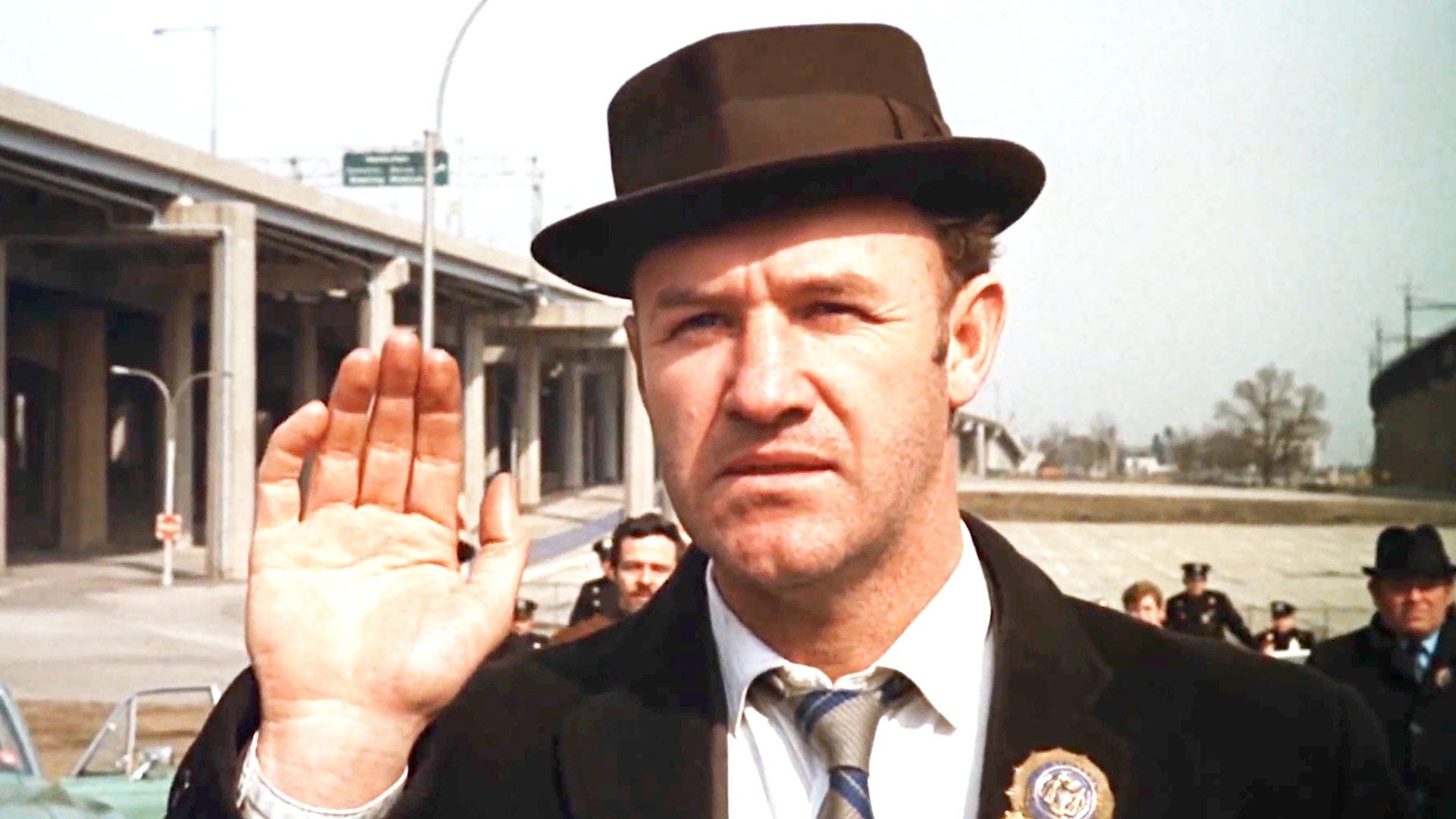
Here’s another example. The French Connection upsets some of its contemporary admirers because of a single line with a racial slur said by Popeye Doyle (Gene Hackman) early in the film—a line that was removed on the Criterion Channel to the horror of many viewers who think of Criterion as the last bastion of cinema preservation. Writing in the New York Times, Niela Orr notes there are many things in the film that Popeye shouldn’t do and that “The point of the edit isn’t to turn Doyle into a noble guy, just one whose movie modern viewers can watch without any jolts of discomfort or offense.” She’s exactly right—and therefore one way that the film is defended by its admirers is by their calling it an “investigation” of the detective film a film “about” the genre that offers a bad and broken cop as its hero: “I want to say how much I enjoy this movie, but am I a bad person for finding Gene Hackman charismatic and hoping he gets Frog One? Will people think that I endorse Popeye’s attitudes? How do I reconcile these conflicting urges? I know: I’ll call it a deconstruction of the genre. It’s actually about the detective movie! Pass the popcorn.” Yet the verbal calisthenics are not stronger than the draw of watching Popeye Doyle shadow Alain Charnier, connect the dots, lose him in the subway, take apart the car, and follow the train in that 71 Pontiac Lemans. Those genre elements have been taken from a million other police procedurals and William Friedkin knew that, anti-hero or not, the audience would be drawn into Popeye’s Ahab-like obsession by making these elements as compelling as he could. Every genre film sticks to the formula; the art lies in how the filmmakers put their stamps on these to explore whatever aspect of human nature they find interesting.
We can watch Unforgiven as a meditation on why we are drawn to violent tales of lone men, how Americans have mythologized the west, or how these films reveal our complex relationship with our own historical past—but that’s all in baked into the cake as a minor ingredient. We might taste hints of those ideas, but our taste buds are truly charged when when watch Clint Eastwood walk into that tavern (another element) and calmly ask, “Who’s the fellow that owns this shithole?” That’s the question to which we respond much more than, “How does the film self-reflexively examine the endurance of its genre?”
Francois Truffaut is supposed to have originated the idea that there really is no such thing as an “anti-war” film: even directors that depict the traumatic effects of combat still assume (in the world of the film) that war itself is a legitimate enterprise and even the most obvious examples can’t compete with the genre elements that they still, despite what might seem like a philosophical stance against them, include. Francis Ford Coppola can make Colonel Kilgore say as many terrible things as he likes and show us as many atrocities as he can, but he also moves “Ride of the Valkyries” from one chopper to the larger soundtrack so that the viewer is drawn into the moment and sees its appeal for someone like Kilgore. The helicopter sequence is horrifying and thrilling. It’s meant to provoke our minds and let us view Apocalypse Now as a film “about the war film”—but it’s a tried-and-true element nonetheless that provokes a visceral reaction to the ballet of the choppers.
Genre elements trump theory and meta-story every time.
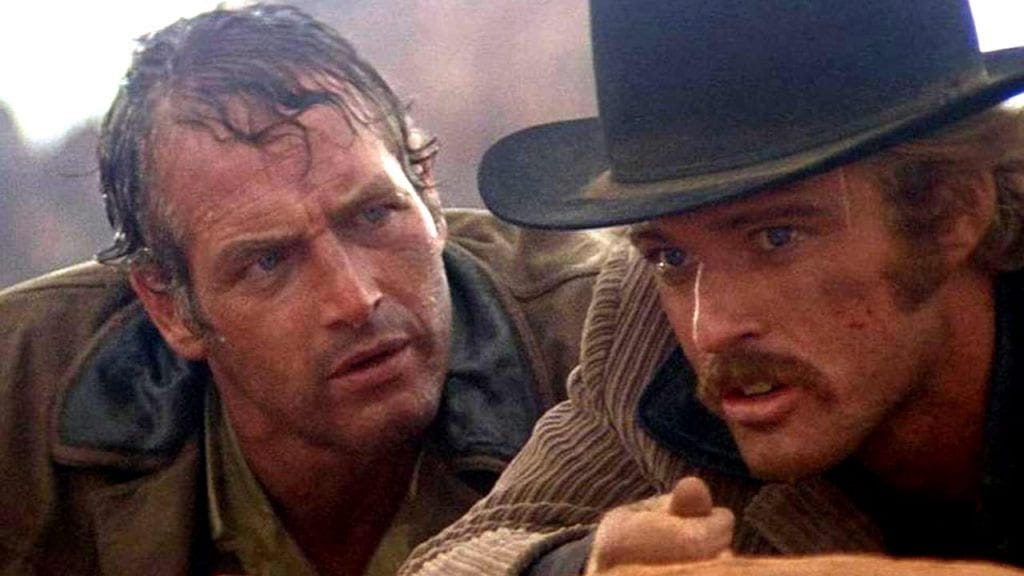
Butch Cassidy and the Sundance Kid (George Roy Hill, 1969) works the same way as Unforgiven. It’s “about the western,” by all means–but it’s more a cheerful, affirming celebration of the genre than a query. Released the same year as The Wild Bunch, it does remarkably the same things for which Peckinpah (and later Eastwood) were praised: it asks a contemporary audience whose taste for cinematic westerns was waning to take another look and be reminded of why these films were so popular. Roger Ebert complained about it in his original review, saying, “William Goldman’s script is constantly too cute and never gets up the nerve, by God, to admit it’s a Western.” Even Homer—and the Jolly Roger—nod, for saying that the film never admits it’s a western is like saying Murder on the Orient Express never admits it’s a mystery. Watching it now, even further removed from a time when westerns were dying in film and Bonanza and Gunsmoke still had a few more years on television, it has the same effect as Unforgiven: regardless of all the questions it might raise “about” the genre, it ultimately makes us want to watch more westerns.
William Goldman knows this—and us—very well. The film opens with the viewer in a theater, watching a silent movie depiction of Butch and Sundance’s capers. As we hear the tinkling piano and watch the grainy images of a train robbery, we also get the opening credits in a very 1969 font, not an imitation of an old-time “western” font like

with the names of the film’s two biggest stars. You couldn’t be reminded any more blatantly that you are watching a movie, an obvious fact that directors usually take pains to hide. We are then told, “Most of what follows is true.” Aha! That “most” will come in handy as I think about this later! Surely this film will be “about the western!”
Sure. But first, we get a sepia-saturated scene that introduces Butch (Paul Newman) and Sundance (Robert Redford) in a celebration of why we love the genre. If you haven’t seen it in a while, watch it in the above player. Then count the elements: very handsome dudes, a poker game, an accusation of cheating, a point of pride, a tense moment before a gun is drawn, words about the long reach of a man’s reputation, incredible marksmanship, and the twirling of the revolver on a finger before it’s holstered. The business of “Why don’t you think about asking us to stick around? You don’t have to mean it or anything” is a step away from Owen Wister’s The Virginian (1902) when the title character, in another card game, is called a “son of a b—” and says, “When you call me that, SMILE.” We’ve read about and seen these things a thousand times but they never get old. Goldman and Hill knew that the best way to ask their viewers why they love westerns—to ask if Butch Cassidy was “about the western”—was to make a great one.
Butch Cassidy and the Sundance Kid is both nostalgic for a dying genre yet also representative of its moment. In our episode on the film, Mike describes it as if Hair and The Searchers had a baby: it offers an alternative to what some viewers were viewing as being stuck in Squaresville—Easy Rider with horses, as he later texted me. The Hole-in-the-Wall gang (and the later Bolivian excursion) exists so that Butch and Sundance can live outside of the rules. They aren’t the May 19th Communists robbing the Brinks truck in 1981 or the IRA robbing the Northern Bank in 2004. They rob trains and banks because they need the money to stay in their suspended childhood and to live inside of a western movie that looks very attractive if we could live in it as Butch or Sundance, fake-bickering with a loyal friend or riding our new bicycle to amuse Katherine Ross. Nobody gets hurt and, frankly, if you had to be at the losing end of a heist, wouldn’t you want the robbers to be these guys? Michael Mann can offer the real thing. George Roy Hill offers us the comforts of the genre.
The deaths of Butch and Sundance can be likened to the deaths of the genre, but the force of the elements and charisma of the actors is what makes us keep coming back. Those elements were so successful with audiences that Hill remade the movie four years later, The Sting being essentially the same wonderful thing: Butch Cassidy with Pierce-Arrow sedans. Those wanting to know the real story of the gang can read Tom Clavin’s recent Bandit Heaven; its subtitle, The Hole-in-the-Wall Gangs and the Final Chapter of the Wild West, does the same as the final image of the film, pointing out that an era and genre have (in many ways) passed. So yes, the end of the film is a commentary “about the western,” but if the meaning of that comment is that the genre has died, that doesn’t reconcile with our joy of having lived in it for the last two hours.
The most notable line from any western is “Come back, Shane!” The second is what the newspaper editor tells Jimmy Stewart in The Man Who Shot Liberty Valance: “This is the West, sir. When the legend becomes fact, print the legend.” That’s exactly why we respond to beloved genres more than any attempts to undermine them. We all live in “the West” more than we do in the academy or on Substack.
I think that a lot of people spend a lot of time trying to justify their admiration for works of art that they classify as “problematic,” a meaningless catch-all term. You’ve identified one of the key justification strategies.
Find me a good or great movie that isn’t problematic - meaning: ambiguous, unresolved, troubling.
The case of the very smooth and seamless edit in THE FRENCH CONNECTION is not as people believe it to be. It was not done by Criterion and it was not done by Disney. Anyone who wants to see the film without the edit should just watch the Blu Ray, which includes a supplementary interview with Gene Hackman where he discusses the scene.
This was a great review! Thank you. I watched it for the first time recently, and thought it was fantastic. One of those "classics" that didn't disappoint the first time around.