

Leopold Zoom
Ulysses and The Catherine Project

Reading is a solitary experience, but thinking about what we read is often best done with others. Who among us has not read a book and urged their friends or families to read it, too, so they could talk about it before their memory dulls? We badger other people with the Five Sacred Words “You’ve got to read this,” but the magic doesn’t always work; the last people who actually take our reading recommendations are often those closest to us. Even when we read about what we’ve read, we’re trying to mimic conversations: I’ve learned a lot about Shakespeare by “talking” to Samuel Johnson and A. C. Bradley. This desire to discuss great books in genuine give-and-take conversations is what fuels The Catherine Project, a wonderful organization dedicated to connecting readers in live discussion groups held online. (I’ve written more in-depth about my first encounter with it here.)
After participating in some Catherine Project reading groups and leading two on A Portrait of the Artist as a Young Man, I was inspired by the camaraderie of the readers and thought about leading one on Ulysses. I had reread it for the first time in decades and it gave me an itch to talk about it that had to be scratched. But just as one does not simply walk into Mordor, one does not simply launch a reading group on Ulysses. Some sonnets by Milton? Of course! A Shakespearean comedy? We can begin in ten minutes. But Ulysses is a long-term and high-effort commitment. In Portrait, the Director of Belvedere College tempts Stephen Dedalus into the fold by describing the “awful power” of a priest; on a smaller scale, I felt the same way about offering a group on Stephen’s next adventure. What an awful power Joyce presents! The power to get readers talking about “Stately, plump Buck Mulligan,” to make sense of Stephen’s musings, to untangle the threads that run throughout that day in June, to navigate the rushing waters of Molly’s mind—all of these were thrilling and demanding.
I hemmed and hawed about pulling the trigger, walking around like Hamlet, seeing my native hue of resolution sickly over with the pale cast of thought. What if the readers didn’t really enjoy it? What if they weren’t wholly committed to the enterprise? Remember, this was twenty weeks of almost two-hour discussions, not one ninety-minute webinar. The Catherine Project demands that its readers and facilitators be all in: no cameras turned off, no missed meetings, and no whining.
Eventually, I knew I had to try it and the results exceeded my already-great expectations because of the quality of the readers and what they were discussing.
Our first meeting was at the end of January. Like Charles Foster Kane, we began with a Declaration of Principles. First, our goal was not to “solve” the book or tease out every allusion. Doing so with the aid of Notes for Ulysses or The Joyce Project and thinking that every unclear phrase or moment needed to be clarified before continuing would only lead to frustration or turn us all into the “Ackchyually” guy. We would meet the book from where we were with the faith that Joyce would teach us how to read it. The goal in the opening weeks was to allay any fears about a novel filled with (as Stephen tells his headmaster) “those big words that make us so unhappy.”
Second, we would pretend that everything about Ulysses was all-new and that we weren’t aware of the reputation and cultural currency it has developed since 1922. We reminded ourselves that there was a time when readers didn’t grasp the scope of the title or that it’s a long book about a single day, something we aren’t told until the tenth episode, when Blazes Boylan’s secretary types “16 June 1904.” We used the Vintage edition, which, unlike the Gabler one, has no line numbers and a bigger font: physically, it looks as approachable as any other novel and that was important to help lower the Joycean affective filter. Yes, the Gabler edition is “the corrected text,” but we knew we’d be fine; one can read the Riverside Shakespeare and not fret over the textual variants for each play. Each of us would encounter the novel directly.
Third, we promised to do our best, if we had read it already or read ahead, to avoid spoilers. This is an odd request for a nearly-plotless book but Joyce strategically reveals information so that when we make a connection, we get a little jolt of adrenaline akin to a clue in a mystery. When we first read Bloom’s letter to Martha, for example, we wonder how they know each other; learning how Bloom got her address is a great joke and another tile in the mosaic of his character. After we hear Martin Cunningham whisper to Mr. Power about Bloom’s father’s suicide, we are not privy to the note he left behind for another five hundred pages. Ulysses is suspenseful not because of what will happen but why something is happening: we know very early that Molly will sleep with Boylan, but why—and why Bloom reacts as he does—is a mystery that unfolds as we move through the novel. That’s one of its mimetic achievements: were someone to record your thoughts and emotions over the course of a day, the result wouldn’t be a resume or list of Important Life Events in chronological order; it would be more like the junk drawer in your kitchen, with some items shoved far into the back, only brought out once in a while.
We began each session with questions: each reader offered one about the episode, a character, a moment, or even a word. I recorded all of them and noted when they arose during the conversation. I’d then toss out one of my own for the group to consider and then, after a minute of silence, we began. Some of the opening questions were deceptively simple (“But who was Gerty?”); others had to do with the episode’s style or issues. Because the readers were so enthusiastic and genuinely interested in each other’s ideas, we were able to have one question lead to another and branch out into further topics. Our question for “Nestor” about why Joyce presents Stephen in a classroom led to ideas of history (the nightmare from which he is trying to awake), both national and personal; our question for “Oxen of the Sun” about the experience of reading the episode led to a discussion of what happens when simple actions are cloaked in complex prose. I never ended a session without learning something or without having encountered an idea I hadn’t before considered.
We gelled almost instantly and I wondered if the other bróg would drop. How could a lottery arrange for these fourteen terrific people to all decide to read Ulysses at the same time in their lives? And these were wildly different lives: the readers were of all ages and places, living in states from New Jersey to Hawaii. One was from Türkiye, which meant that when we met at 6:30 each Sunday evening, he was logging in at 1:30 each Monday morning. Yet we connected because we were all fascinated by the book: we talked about the Blooms’ marriage instead of our own, Stephen’s ideas about Shakespeare instead of our own pet theories, and the intricacies of the language, never generalizing and reading from 30,000 feet off the page, but always pointing to passages that we would read aloud and unpack. Nobody soloed and, as in other Catherine Project groups, we didn’t know what the others did for a living, unless it happened to come up in conversation, as when one of the readers mentioned his work as a journalist which made him sympathize with Bloom trying to placate angry editors. Joyce was the reason we were there and nobody minded being overpowered by the novel. When Dave Eggers titled his memoir A Heartbreaking Work of Staggering Genius, he was being playful and ironic. Here, we reveled in our encounter with the real thing. We found in Ulysses an example of (as Hamlet says) increase of appetite growing by what it fed on: the more we read, the more we wanted to reread, confirming Hugh Kenner’s claim that no single comprehensive reading of the novel is possible: “Its universe is Einsteinian, non-simultaneous, internally consistent but never to be grasped in one act of apprehension.”1
When we reached the fourth episode (“Calypso”), we discussed our initial impressions of Joyce’s hero. The opening sentence, “Mr Leopold Bloom ate with relish the inner organs of beasts and fowls,” hints at his appetites, both carne and carnal (the “hams” of the girl in the butcher’s). We found him thoughtful, solicitous of his wife (the careful breakfast), a daydreamer, empathetic, and someone whose mind we enjoyed reading—a mind as far away from Stephen’s as Jason Compson’s is from Quentin’s. Earlier, Stephen thinks, “Signatures of all things I am here to read,” and Bloom has a similar tendency. Yet Bloom’s reading of the world isn’t like Stephen’s. Stephen has filtered his experience through his education; Bloom is like someone who has watched a lot of YouTube videos. We grew to love Mr. Bloom, even when he exasperated us or, in “Naucissca,” made us uneasy.
A frequent cause for celebration was Joyce’s skill at imitating different styles, voices, and literary forms. Simon Dedalus’s catalog of cliches, Martha Clifford’s letter to Bloom, Bloom’s own poetry, the parodies in “Cyclops,” the evolution of styles in “Oxen of the Sun,” the phantasmagoric theatrics of “Circe,” the catechism of “Ithaca,” and, of course, the real stream-of-consciousness of “Penelope”2 were occasions for us to appreciate Joyce’s audacity—a word that regularly surfaced—and note that there was nothing like it under the sun. We admired as much as we dissected.
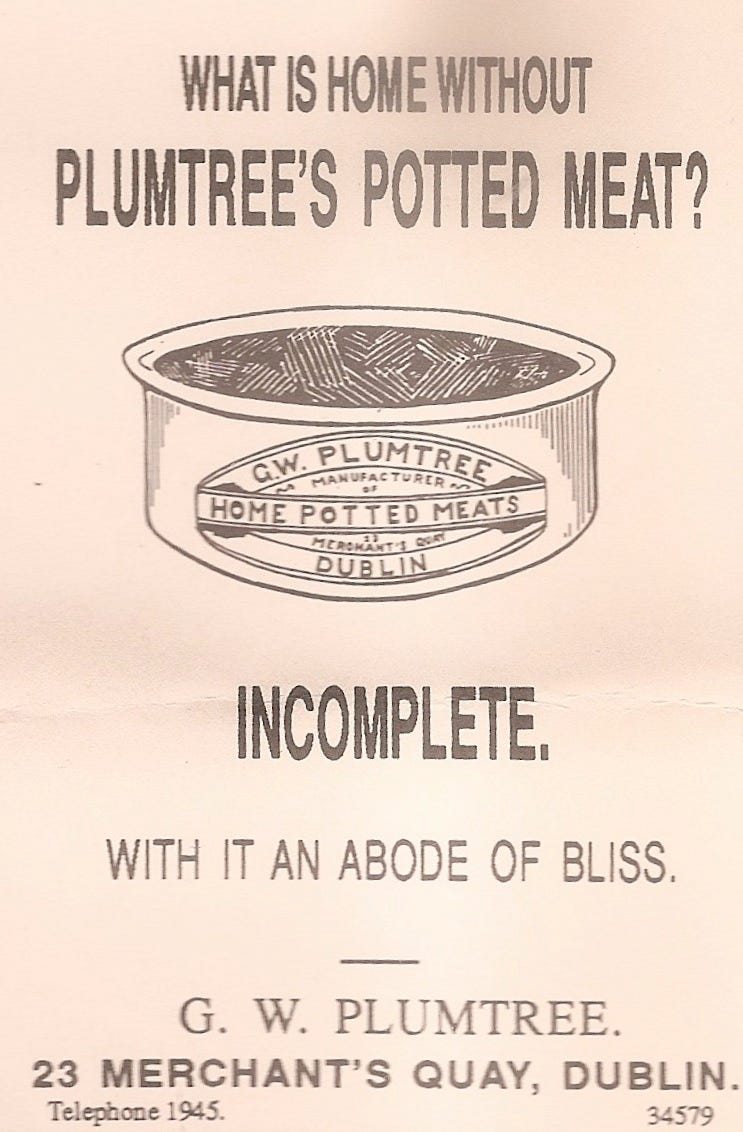
We also laughed—a lot. Joyce lamented that too many readers revered the book more than they enjoyed it and missed the fact that it’s a comedy.3 His great biographer Richard Ellmann calls it “a comedy, but with teeth and claws”4—fair enough. But Joyce often laughed out loud to himself as he wrote it and the book is filled with the kind of observational humor now found in a thousand standup routines, like when Bloom asks why saltwater fish don’t taste salty or his near-fury at the “worst ad in the world,” one for Plumtree’s Potted Meat. We also laughed at many of the jokes (and blasphemies) of “Mr Malachi Mulligan, Fertiliser and Incubator, Lambay Island,” the list of Irish heroes found in “Cyclops,” Molly’s comparison of female and male anatomy, the description of “Flowerville,” Deniss Breen’s postcard, and the vision of the New Bloomusalem, the “colossal edifice with crystal roof, built in the shape of a huge pork kidney, containing forty thousand rooms.” And while none of his fellow mourners in “Hades” laughs at Bloom’s attempt to tell a funny story, we all did.
We tackled the novel’s heavy issues as well. What is to be made of Bloom’s response to Molly’s adultery? One reader noted that the Blooms are dealing with what might today be called the “unprocessed trauma” that followed the death of Rudy, which sheds light on their sexuality, emotional frustrations, and the way they respond to each other, like a kinder and gentler George and Martha of Who’s Afraid of Virginia Woolf. When another reader spoke of how Joyce was able to go as deep into a person’s consciousness as a writer could go, those of us of a certain age recalled Jimmy Carter telling an interviewer that he had committed adultery in his heart many times and that any reader eager to judge Bloom should first ask how they would fare in the eyes of the world if their own souls were (to cadge from “Prufrock”) thrown by a magic lantern on a screen for all to see.
An idea that took shape over the twenty weeks was that despite the book’s stylistic extravagances and Joyce waving to us from every margin, reminding us of his presence in ways that other novelists attempt to hide, the book is still moving in its depiction of common human experience. The loss of Rudy, Bloom’s dealing with his superiors in the newspaper office and cuckolding in the boudoir, Stephen’s guilt and unfinished business with his dying mother (“agenbite of inwit”), Bloom’s loneliness and hopes that he has found a friend in Stephen, and Molly’s memory of Bloom’s proposal all made us a little more quiet when we discussed them. We found Ulysses audacious but also fundamentally human. Joyce never sacrifices poignancy for stylistic innovation.
After each session, I assembled my notes into a recap, which I emailed to the group; when we finished, the document containing all the recaps was over 16,000 words. Like the nineteen smaller segments that make up the “Wandering Rocks” episode, we were all independent yet linking our ideas in unexpected ways. Again, the camaraderie and synergy led to new ideas; one reader noted that we always found new passages worth rereading as we “cobbled together” an understanding. A few days after we finished, one reader emailed the group:
Reading books like these can feel challenging, lonely, and plodding, like climbing a very steep mountain at a very slow pace. But in the sessions with you all, sometimes someone said something, and another person took it further, and it pulled at a hook in my brain. It felt like I’d gone from walking to running and that is so, so much fun. So thank you all for the chances to run. I certainly couldn’t have done it without you.
The sentiment found in this email was felt throughout the group, typified by two of the readers, who didn’t know each other until our group began and who had already planned to be in Dublin on Bloomsday, meeting each other there in person. Ulysses really does bring people together.
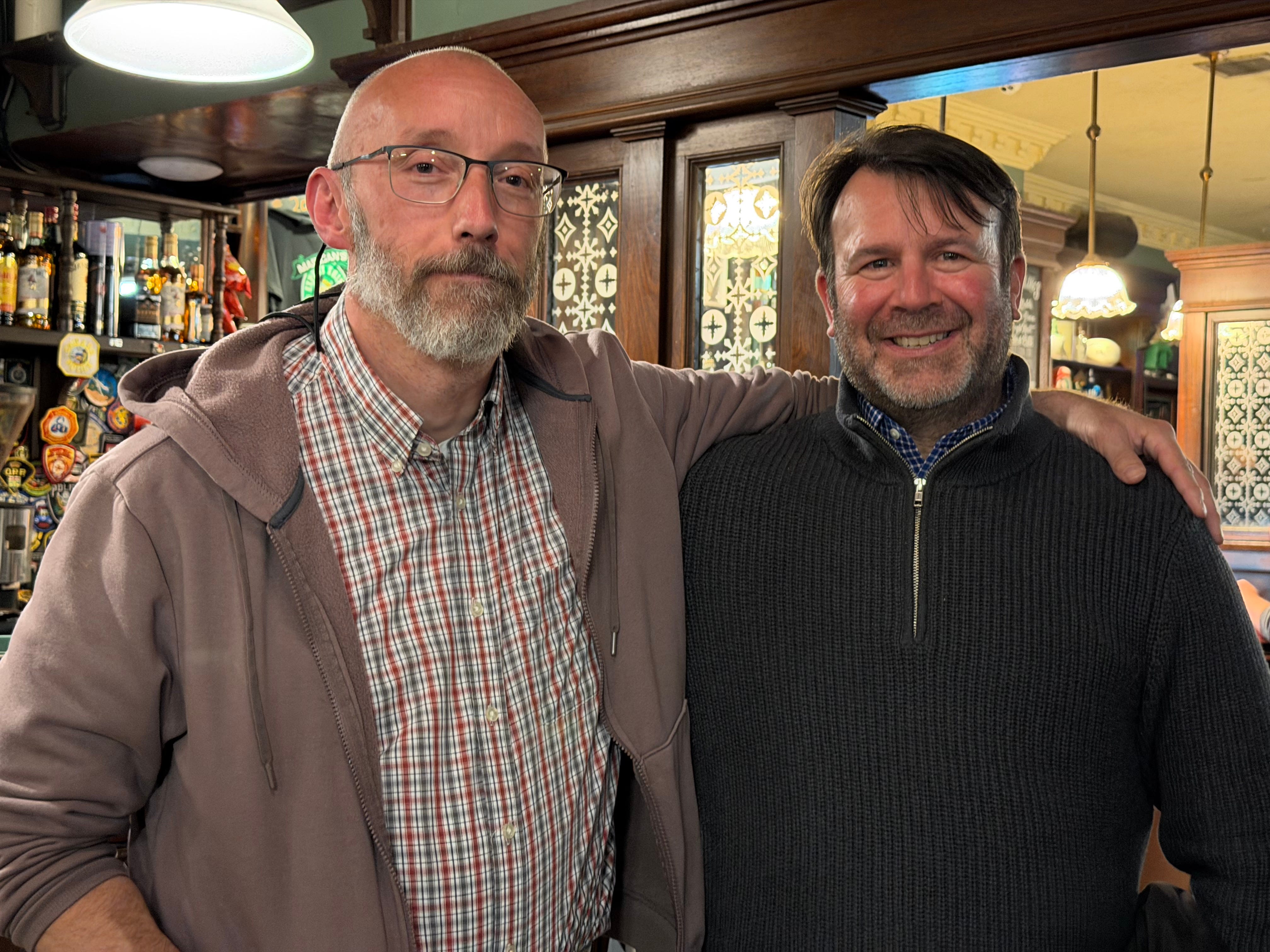
Fran Lebowitz observed, “The opposite of talking isn’t listening. The opposite of talking is waiting.” She’s generally right, but the people I met in this group were incredibly skilled at listening and building off of each other’s ideas instead of simply waiting for others to breathe so they could fill the space with unconnected statements. Of course there were times when we all wanted to say our piece about an episode—and we did; we weren’t made of stone. At the final meeting, each person spoke for a few minutes on the experience of reading Ulysses in a group, at this pace. Some noted the themes and ideas; others spoke about the ways in which the group motivated them to continue; others spoke about their having thought they would never have the chops to get past Stephen’s thoughts “Proteus.” One said he wasn’t sure if he would look at people differently after Ulysses but that he could never again look at literature in the same way. He then rattled off a list of twenty-seven phrases from the novel that became part of our patois, like “Your head it simply swirls,” “General Paralysis of the Insane,” and “K.M.R.I.A.”5
When I wrote a final email to the group, I said that reading Ulysses with them was one of the high points of my reading life. But I corrected myself: it was one of the high points of my life, period. I spent thirty-five hours with fourteen smart and friendly people talking about a seven-hundred page book that spans a single day. That I wish we could do it all again is a testament to Joyce and the kinds of readers he inspires. Every Sunday was Bloomsday.
Hugh Kenner, Ulysses, rev. ed. (Baltimore: Johns Hopkins University Press, 1987), 81.
Today, one often hears readers describe any three consecutive sentences detailing a character’s thoughts as a “stream of consciousness,” but Molly’s monologue is the actual thing.
Richard Ellmann, James Joyce. New and revised ed. (New York: Oxford University Press, 1982), 584–585.
Richard Ellmann, “The Politics of Joyce,” The New York Review of Books, June 9, 1977.
“Kiss My Royal Irish Arse.”
Dan captures the dynamic of this reading group well. At first for me, the waiting was the hardest part, but every time I had the courage to wait and let the discussion unfold I gained a new insight and had to recalibrate and expand my thoughts on what we had read for the week. I waited often enough to shed many of the academic preconceptions I had carried with me into the Catherine Project group.
There are a couple of aspects to the group that added to the energy and dynamics of our discussions. There was a core group who had recently engaged with Joyce's "Dubliners" together and they brought into the "Ulysses" sessions a keen passion for Joyce and an interest in Dublin that helped us all dig deeper into both the stylistic roller coaster of the longer novel and follow more closely the very pedestrian traversing of a fascinating city. Everyone in the group took great pleasure in reading passages out loud during our calls, either as solo riffs on what prose we found exciting, poetic, confusing, whatever or in group performances of some of the more theatrical episodes. The power of Joyce's language to my ears added greatly to my comprehension.
Many of us from the group expressed interest in reading Ulysses again. Perhaps next time we will figure out who is the "man in the brown macintosh."
Nice piece Dan! You've made me want to read Ulysses.
We don't have to worry about Christopher Nolan making it into a movie, do we?