

Politics and Artists
A True Story and Footnote to Two Recent Posts

Three weeks ago, I posted “Great Art by Terrible People” and asked whether there was an ethical problem in admiring art made by criminals or why we even want those who make the art we enjoy to be “good people,” since we don’t feel the same way about those who make our cars, sunglasses, and furniture. That was followed up with “The Chinatown Problem” in which I collated the many responses to “Great Art” and offered some new ideas.
Since then, Robert Fay, at Literature and Geopolitics on Substack, left the comment, “We have been milling the same material” and I checked out his post, “Great Writers, Bad Politics.” Fay does with writers and their political views what I do with their moral transgressions. The approach is different but several ideas are the same: we almost always need to separate the art from the artist when the artists we admire express or do things of which we may not approve. Fay brings out Céline, V. S. Naipaul, Sartre, Cuban novelist Alejo Carpentier, and David Mamet as examples of the dynamic in his title. (Ezra Pound slipped through the cracks.)
The Mamet example reminded me of a particularly unpleasant experience that serves as a retroactive example of the issue at hand.
In May of 2021 I saw a call for submissions of a chapter in an upcoming book about Mamet’s films published by a well-known university press. “The intended scope of the work,” ran the call for papers, “is to analyze Mamet’s unique position as an artist of note in both the theatre and the cinema, as well as his very specific ideas about dramatic structure, performance style, and economical visual storytelling. It will argue, for the first time, that Mamet’s film work is an essential, but underappreciated dimension of his artistic career.” I submitted a proposal on Homicide, Mamet’s 1991 detective film; it was accepted and I was thrilled. Because I love the film, writing about it was sometimes challenging—I wanted to get it just right—but I finally completed, in a few months, an 8,000-word essay that, I think, does it justice. Months later, I hit “send” and felt great.
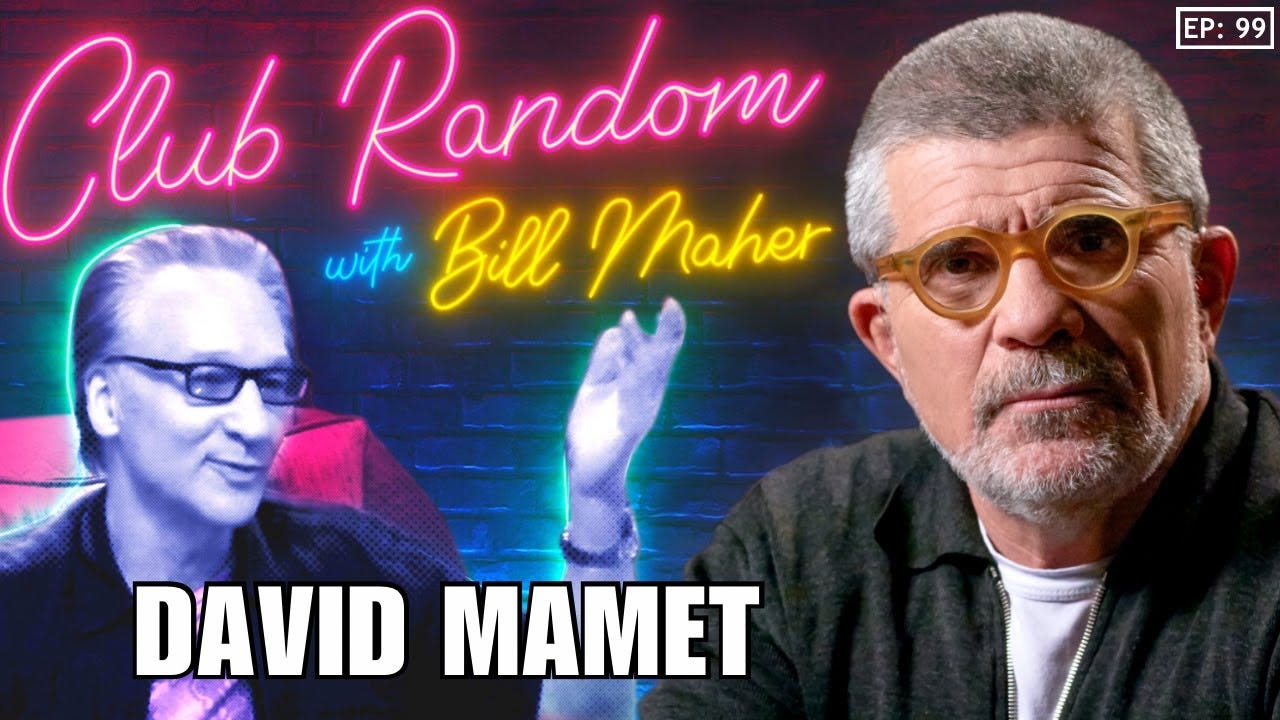
In April of 2022, however, I received an email telling me that the project was canceled because of comments Mamet had made to Bill Maher, Mark Levin, and others while promoting his book Recessional. Contributors were informed that despite the book having a complete interview with Mamet, the publisher was pulling the plug. There was no statement about whether canceling the book contributed to a culture in which art and artists can no longer be separated or how ideas of the moment, regardless of their rectitude, are used to judge creators instead of their creations. There was no attempt to differentiate between Mamet and his films, only a year ago seen as “essential” and worthy of deep critical examination and appreciation. I would paste it here, but am not going to ask for permission to quote that I wouldn’t receive.
The reason for cancelling the book was because of what Mamet said to Mark Levin. Here’s a transcript taken from the April 11, 2022 edition of Deadline:
Speaking on the hot-button topic of community and parental control in schools, Mamet said: “We have to take back control. If there’s no community control of the schools, what we have is kids being not only indoctrinated but groomed in a very real sense by people who are — whether they know it or not — sexual predators. Are they abusing the kids physically? No, I don’t think so, but they are abusing them mentally and using sex to do so. This has always been the problem with education, is that teachers are inclined, particularly men because men are predators, to pedophilia. And that’s why there were strict community strictures about it, thank God. And this started to break down when the schools said, ‘You know what? We have to teach the kids about sex. Why? Because what if they don’t do it at home?’”
The remark about teachers is obviously beyond the pale if taken to apply literally to all male teachers—but I don’t want to even parse it because nothing Mamet says can undo my admiration of Homicide. I’ve been a teacher all my life and this just makes me shrug. I don’t know what many of my favorite artists think about many issues—and, most of the time, I don’t care. I could write everything I know about John Coltrane the person on the back of a postage stamp; if that were expanded to a full sheet of paper, it would’t affect how I hear “My Favorite Things.” At least the Bill Maher interview, referenced by the publishers and linked in Robert Fay’s essay, demonstrates the kind of conversation one is still able to have when they find their interlocutor misinformed, wrong, or crazy. Maher does there with Mamet what the publishers wouldn’t.
I responded to the email:
I came not to praise Mamet but to examine his films. We can all identify sublime works of art created by less-than-admirable people; I won’t bore you with the list of usual suspects with which I am sure you are familiar. (Quick example: people still talk about Chinatown.) Mamet’s crimes—appearing on TV shows and shooting off his mouth—pale in comparison to those of other, oft-lauded artists.
I haven’t watched any of the clips and have little interest in Mamet as a political thinker. His views may be as abhorrent as stated in your email. If so, canceling the book seems like a missed opportunity to examine the ways in which an artist’s public, political pronouncements impact the reception and study of his works.
As Bobby Gold says in Homicide, “Politics, man—nothing but politics.”
Since he lives in Mametland, Bobby adds an expletive in there, but I wanted to remain professional.
In regard to his comments, Wow, is all I have to say.
I've only begun to read Eakins Revealed: The Secret Life of an American Artist, by art scholar Henry Adams, but it tells a related tale. Eakins was fired and ostracized for having revealed the genitalia of a male model to his female art students. Following his death an art scholar and early curator at the Whitney museum of art "air-brushed" Eakins life story which led to his art being lionized. It's a fascinating tale of duplicity on both sides of the coin.